A seiro is a Japanese steamer basket: you set it over a pot of boiling water, put the lid on, and the steam cooks whatever is inside. Using one comes down to four steps: boil the water, steam with the lid on, serve, then wash and dry the basket well. A common question is whether it will fit your pot. The 3-gō seiro made by 栗久, a magewappa maker in Odate, Akita Prefecture, has a perforated board for the steam, so it is not tied to one pot size.
This guide covers what makes a Japanese wooden steamer different, how to use and care for one, and what to steam first.
Seiro and the bamboo steamer
Many people outside Japan know the woven bamboo steamer used for dim sum. A Japanese seiro (蒸籠) does the same job; the word refers to a steamer made of wood or bamboo. The one in this article is made with magewappa, the Japanese bentwood technique: thin sheets of wood, traditionally cedar, are softened with heat and water, bent into a ring, and stitched at the seam with cherry bark. Odate in Akita Prefecture is a well-known center of the craft, and Odate magewappa holds the Japanese government's Traditional Craft designation.
Steaming in wood has a practical advantage. In a metal steamer, steam condenses on the lid and can drip back onto the food. Wood absorbs some of that moisture, so food is generally less likely to come out soggy, and the basket can go straight to the table as a serving dish.
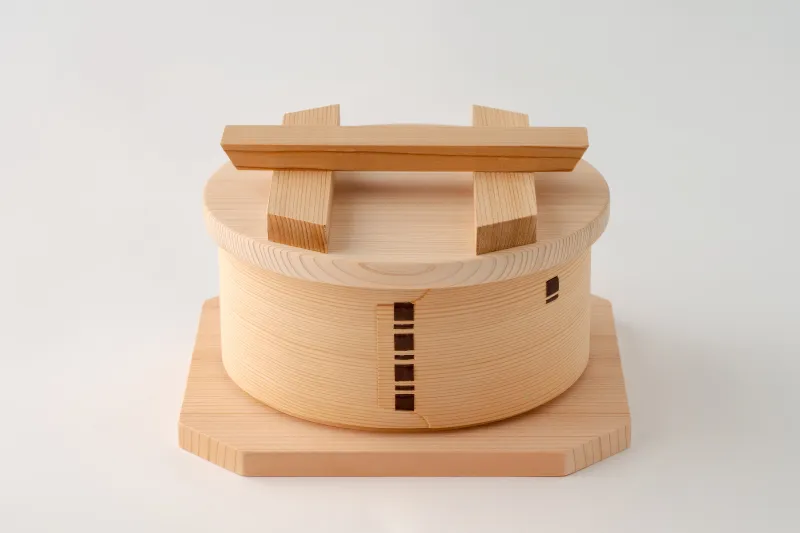
Fitting a seiro to your pot
A typical seiro sits on a pot of matching diameter, or on a steaming plate: a flat board with a hole in it that bridges the gap between pot and basket. Buying a steamer that does not match your pots is a common mistake.
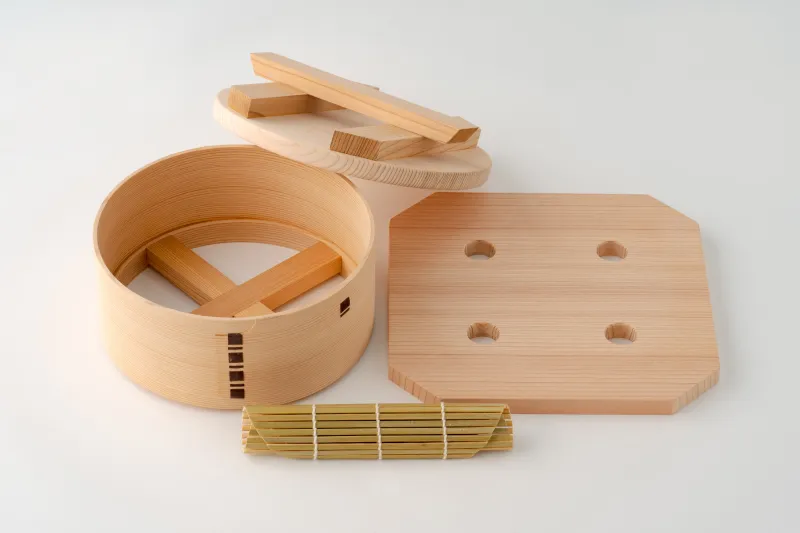
栗久's 3-gō seiro has a perforated board for the steam. In the maker's words, this means you can steam food easily "whatever the size of your pot". The product description also says it can be stacked in two tiers because it has "the same diameter as the 3-gō". If you plan to steam in two tiers, ask the maker which pieces to combine before ordering.
The size name uses gō, the traditional Japanese measure for rice (one gō is about 180 ml). For the exact dimensions, check the product page or ask the maker.
Price: ¥20,900 (Japanese yen, tax included, as of October 2026. The amount shown on Buyee varies with exchange rates and fees.)
How to use a Japanese steamer basket
These are the basic steps. If your seiro comes with its own instructions, follow those first.
- Moisten the seiro. Dip it briefly in water or wipe it all over with a damp cloth. This is generally said to stop the dry wood from absorbing food smells and stains, and to prevent scorching.
- Bring water to a boil in the pot. Use enough for the steaming time you need, but keep the level below the bottom of the basket.
- Line the basket. A sheet of parchment paper, a steaming cloth or a few cabbage leaves keep food from sticking and make cleaning easier.
- Once the water is boiling hard, set the seiro on the pot, put the lid on and steam. Keep the flame within the base of the pot so it never touches the wood.
- During long steaming, check the water and top it up with hot water so the pot never boils dry.
- Serve straight from the seiro.
What to steam first
In Japan, a seiro is an everyday tool for steamed vegetables, shumai (open-topped dumplings), nikuman (steamed pork buns) and reheating leftover rice. Times depend on size and quantity, so treat the table as a starting point and check with a skewer or by tasting.
| Food | Approx. time | Tip |
|---|---|---|
| Broccoli, carrots (bite-size) | 5 to 10 min | Less watery than boiling |
| Sweet potato, kabocha squash (bite-size or rounds) | 15 to 20 min | Done when a skewer slides in |
| Shumai, nikuman (chilled, ready-made) | About 10 min | Line the basket to stop sticking |
| Leftover cooked rice | About 10 min | Spread it on a damp cloth or a sheet |
Reheating rice from an ohitsu
Steaming is a classic way to bring cooled rice back to a soft texture without a microwave. It pairs naturally with an ohitsu, the Japanese wooden container for cooked rice: keep the day's rice in the 2-gō ohitsu by the same maker, whose 15 mm lid absorbs the steam so the rice does not harden as it cools, then steam what is left later in the day. More in the ohitsu guide.
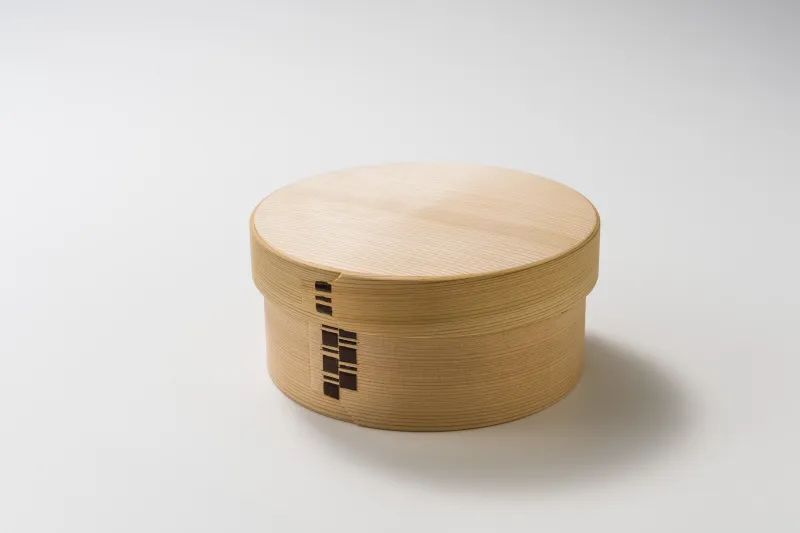
Caring for a wooden steamer
Drying it properly is the most important part.
- Once it has cooled a little, wash it with lukewarm water and a soft brush or sponge. Detergent is generally avoided because the wood can absorb its smell; for heavy dirt, follow the maker's care notes.
- Do not leave it soaking.
- Wipe off the water and let it dry completely in a shaded, well-ventilated place. Direct sunlight can cause cracks and warping.
- Put it away only when it is fully dry. A damp seiro shut in a cupboard or bag can grow mold.
Using a liner every time keeps food off the wood and makes care much easier.
Buying from outside Japan
ITOSHIO does not ship directly to addresses outside Japan. International orders go through Buyee, a proxy shopping service. When you open a product page from abroad, a note titled "Purchasing from Overseas" appears, and you can use the Buyee button on the page to place your order on Buyee. International shipping, Buyee's fees and any duties are shown on Buyee's screens, and the countries and items Buyee can ship are explained in Buyee's own guidance.
If the seiro is going to someone with an address in Japan, choose "I have a delivery address in Japan" on the product page to order for domestic delivery.
Step-by-step instructions: How to buy from overseas with Buyee. Buyee's website: https://buyee.jp/
Featured in this article
| Item | Price | What it is for | Maker |
|---|---|---|---|
| Seiro Steamer, 3 Go | ¥20,900 | Steaming and reheating; perforated board fits different pot sizes | 栗久 (Odate, Akita) |
| Ohitsu Rice Container, 2 Go | ¥44,000 | Holding cooked rice; 15 mm lid absorbs steam | 栗久 (Odate, Akita) |
FAQ
Can I use it on an induction hob?
A seiro sits on top of a pot, so it depends on the pot: if your pot works on induction, you can steam with the seiro on it.
Do I need to do anything before the first use?
A common recommendation for wooden steamers is to steam the empty basket once to let the wood's aroma settle. If your seiro comes with first-use instructions, follow those.
How is it different from a metal steamer?
A metal steamer is sturdy and easy to clean, but water from the lid can drip onto the food. A wooden seiro absorbs some of that moisture, so food is less likely to turn soggy, and it doubles as a serving dish. The trade-off is that it needs to be washed and dried carefully after each use.
Can I steam in two tiers?
The product description says it can be stacked in two tiers because it has "the same diameter as the 3-gō". Ask the maker which pieces to combine before ordering.