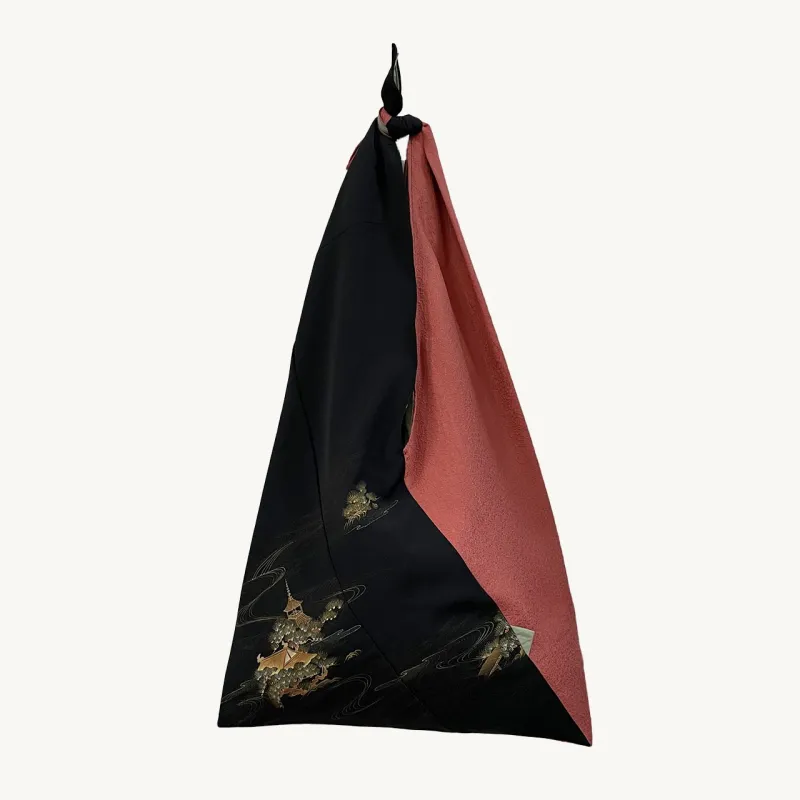
An azuma bukuro is a Japanese cloth bag sewn from rectangles of fabric into a triangle. You tie the two top corners together to make the handle, so it looks like a knotted furoshiki wrapping cloth, and it is sometimes called a “furoshiki bag.” The difference is that an azuma bukuro is already stitched into a bag, so there is nothing to fold or wrap each time.
kico, an upcycling brand in Japan, sews its azuma bukuro from vintage kimono. One kimono yields only one or one and a half bags, so every piece is one of a kind. This guide explains where the bag comes from, how kico's sizes and linings differ, what the kimono patterns mean, and how to care for vintage fabric. If you live outside Japan, see the FAQ at the end for how to order through Buyee.
What is an azuma bukuro?
kico also calls the azuma bukuro a “triangle bag.” Laid flat, it forms a triangle; you knot the two side corners to carry it by hand or over the shoulder.
According to kico, the bag goes back to the Edo period, when Edo townspeople who admired Western bags are said to have imitated them using furoshiki wrapping cloths and tenugui hand towels. “Azuma,” also written 吾妻 or 東 (east), referred to Edo as seen from Kyoto, and so the bags came to be called azuma bukuro.
Furoshiki or azuma bukuro? A furoshiki is a single unsewn cloth that you tie around whatever you carry, in a different way each time. An azuma bukuro is sewn into a bag shape in advance, so all you tie is the handle.
Why kimono? How kico makes each bag
kico describes itself as an upcycling brand that hopes to pass Japanese tradition on to the next generation through kimono. The name combines “ki” from 着 (to wear, as in kimono) and 喜 (joy) with “co” from communicate and connection. Its material is kimono that has been lying unused in homes across Japan.
- A long handle you can wear over a coat. kico uses its own pattern with generous handle length, so the bag can go over your shoulder even on top of outerwear. Move the knot to shorten or lengthen the handle.
- All-over pattern or bicolor. Some bags use a single kimono; kico's signature bicolor bags pair two kimono chosen by the makers to suit modern clothes.
- One of a kind. Because one kimono makes only 1 to 1.5 bags, kico can almost never make the same bag twice.
- A water-repellent lining. The 45 cm, 40 cm and long porch bags are lined with plant-dyed, water-repellent recycled nylon (the onibegie series by the Japanese textile company 小松マテーレ). kico says this makes them easy to use for items that drip, such as cold plastic bottles or wine bottles.
kico's shop page also mentions semi-custom orders (choosing the kimono, bicolor or not, lining and size) and making a bag from a kimono you bring in. Prices and lead times for these are not listed, so please ask the maker directly.
Choosing a size: 45 cm, mini, or a bottle porch
The kico bags in this article come in four shapes. Sizes are as listed on each product page. Prices are in Japanese yen, tax included, as of October 2026; the amount shown on Buyee will differ because of exchange rates and fees.
| Type | Size (as listed) | Lining | Good for | Price |
|---|---|---|---|---|
| Azuma bukuro, 45 cm | approx. 45 cm wide × 91 cm long; inner pocket approx. 13 × 17 cm | Water-repellent recycled nylon | Everyday bag, shopping, shoulder carry | ¥33,000 |
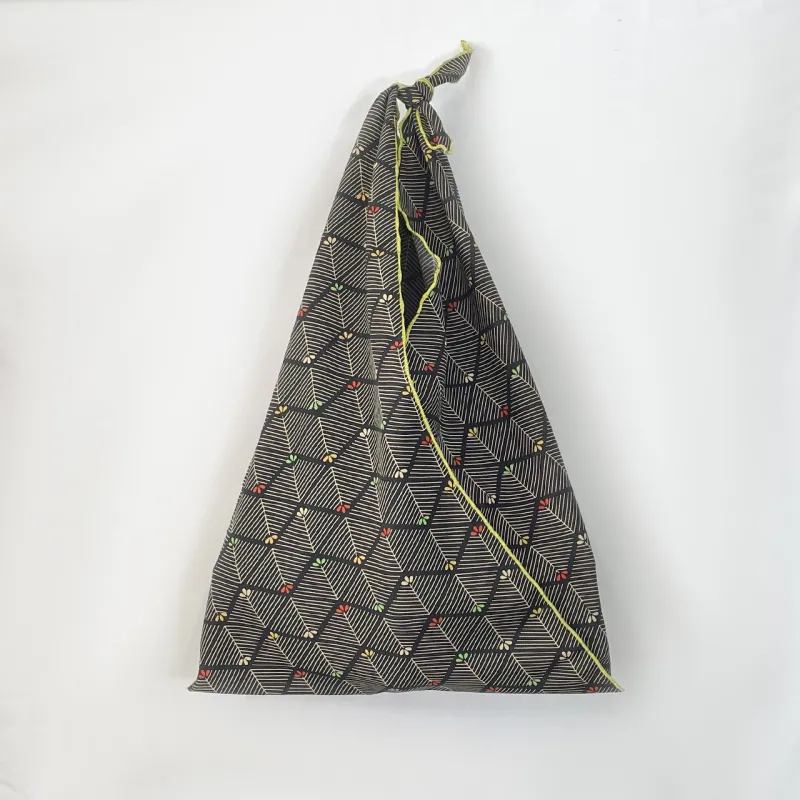
| Azuma bukuro, mini | approx. 55 cm long × 30 cm wide | None (hem edged with piping) | Small hand bag, for children, gifts | ¥3,850 |
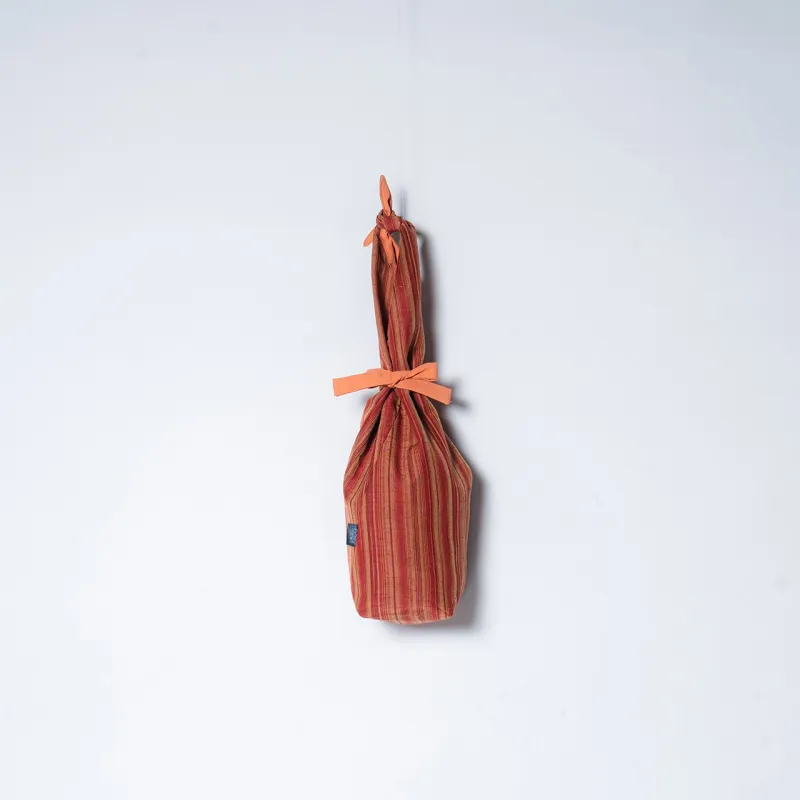
| long porch | approx. 20 cm wide × 50 cm long, 10 cm gusset | Water-repellent recycled nylon | Wine or sake bottle carrier, pouch | ¥8,800 |
| Crossbody porch | approx. 100 cm long × 20 cm wide, 10 cm gusset, one inner pocket | Water-repellent recycled nylon | Crossbody or waist wear, bottle carrier | ¥11,000 |
45 cm is the everyday size, made with kico's long-handle pattern. It has an inner pocket and the water-repellent lining. (The listing for the red-and-white plum and chrysanthemum bag does not give measurements, so check with the maker if size matters.)
mini is unlined, with a brightly colored piping at the hem. The makers describe it as easy to match with kimono, cute for a child to carry, and good as a present or a souvenir to take abroad. The piping color may vary slightly.
porch bags are drawstring bags that hold a bottle of wine or sake. A ribbon made from the lining fabric ties around the neck of the bottle to keep it steady, or closes the pouch when you carry valuables. kico suggests using the long porch to bring a bottle to a home party; the crossbody porch has a long strap you can also tie around your waist.
Kimono patterns and what they mean
Kimono patterns often carry wishes for good fortune. Here is what kico's own descriptions say about each fabric — a nice detail to share if you are giving the bag as a gift.
- 45 cm, golden flowing-water haori and red chirimen: The flowing-water pattern means “eternity” and “cycles,” and the chrysanthemum-on-water motif has long been known as an auspicious sign of long life.
- 45 cm, tsumugi with igeta kasuri and stripes, with flowing water: Igeta kasuri (a pattern of well-frame shapes) and stripes are associated with a safe household and good fortune with money; the pale purple flowing-water pattern stands for warding off evil and purity.
- 45 cm, red-and-white plum with chrysanthemum: Plum blossoms symbolize endurance, vitality and many descendants; chrysanthemums stand for long life and prosperity.
- 45 cm, yukata: A denim-like yukata fabric with gradated stripes that goes easily with Western clothes.
- mini, wakamatsu-bishi: A quiet, elegant pattern of young pine in diamond shapes.
- mini, red mie-dasuki diamonds: Triple lines crossing to form diamonds. kico explains that diamond patterns come from the water caltrop plant and carry wishes for many descendants and good health.
- long porch, tsumugi with vertical stripes: In the late Edo period, understated but carefully made clothing was admired as “iki” (chic), and vertical stripes came to mean iki.
Using and caring for vintage kimono fabric
Adjust the handle by moving the knot: longer to wear over a coat, shorter to carry in your hand.
Because the outer fabric is vintage kimono, the product pages carry these notes:
- There may be discoloration, dye irregularities or weaving flaws that could not be removed. kico asks you to enjoy them as part of the kimono's character.
- kico selects the parts in good condition, but old kimono fabric can be weaker than synthetic fabric. Avoid pulling hard or putting heavy strain on it.
- Friction, especially when damp, may cause the color to transfer to other items.
Take care with light-colored clothes on rainy days. Washing instructions are not given on the product pages, so ask the maker before cleaning the bag.
Products in this article
| Product | Type | Price (JPY, tax incl., Oct 2026) |
|---|---|---|
| kico Azuma Bag [45cm] Bicolor, Haori, Golden Flowing-Water Pattern, Red Chirimen | 45 cm, bicolor | ¥33,000 |
| kico Azuma Bag [45cm] Bicolor, Tsumugi, Igeta Kasuri, Stripes, Flowing-Water Pattern | 45 cm, bicolor | ¥33,000 |
| kico Azuma Bag [45cm] Bicolor, Red and White Plum, Chrysanthemum Pattern | 45 cm, bicolor | ¥33,000 |
| kico Azuma Bag [45cm] Yukata | 45 cm | ¥33,000 |
| kico Azuma Bag [mini] Young Pine Diamond Pattern | mini, unlined | ¥3,850 |
| kico Azuma Bag [mini] Mie-Dasuki, Diamond Pattern | mini, unlined | ¥3,850 |
| kico long porch, Tsumugi, Vertical Stripe Pattern | Drawstring, bottle carrier | ¥8,800 |
| kico Crossbody Porch, Bicolor, Share Komon, Floral Pattern | Crossbody drawstring | ¥11,000 |
Maker's page: kico. Each azuma bukuro is one of a kind, and any item may already be sold out.
Further reading
FAQ
Can I buy a kico bag from outside Japan?
ITOSHIO does not ship directly to addresses outside Japan. International orders go through Buyee, a proxy shopping service: open the product page and use the Buyee button on the page to place your order. International shipping, Buyee's fees and any duties are shown on Buyee's screens, and you should check Buyee's guidance for the countries it ships to and any item restrictions. If you have a delivery address in Japan, choose “I have a delivery address in Japan” on the product page instead. For step-by-step instructions, see how to buy from overseas with Buyee. Buyee: https://buyee.jp/
Can I wash it?
The product pages do not include washing instructions, and damp friction can make the color run. Please ask kico before washing or dry-cleaning.
Can I have a bag made from my own kimono?
kico's shop page says it accepts semi-custom orders and kimono brought in by customers. Prices, lead times and whether this can be arranged from abroad are not listed, so contact the maker first.